Gravitas
I have recently stumbled across the social deduction game Blood on the Clocktower, and over the past couple of weeks, binge watched several days worth of people playing it. I find the idea intriguing. I have since also bought a copy of The Werewolves of Millers Hollow, and read through the rules of that.
But, following the stereotype, I was lying awake one night, pondering the Roman Empire, and I had an idea. Roman life, especially in popular fiction, was full of intrigue and mystery, could this be the basis for a similar sort of game?
Now, I want to be absolutely clear. I am absolutely not claiming to be creative here. This, moreso than any of my other ideas, is cribbing directly from existing games. Mafia, Werewolf and Blood on the Clocktower are obviously very close in design to this. There are some features which are quite obviously just me going "oh, that's a good idea". If you're interested in this, I highly recommend supporting the games that have actually put effort into this. This is just a small experiment for me, and something I compulsively felt the need to write down.
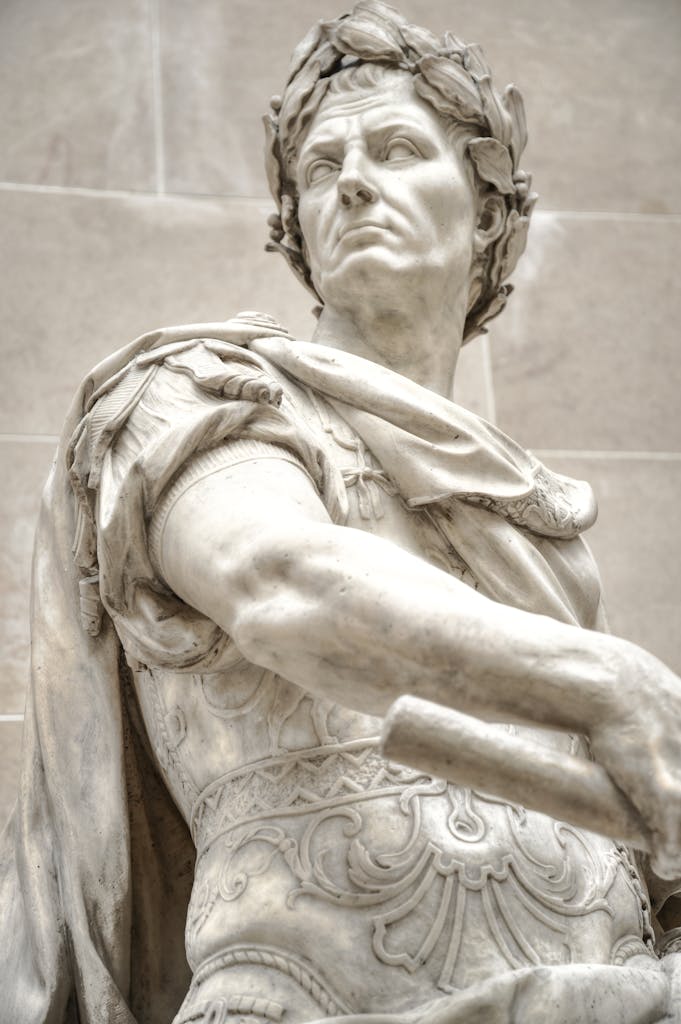
Gravitas is a game where players need to collaborate to ensure that their team wins. They are randomly assigned roles, which can either be Republican or Conspirator. The current state of the republic is represented by the number of 'chaos tokens' in play. The more tokens are played, the more unstable the republic gets. The republicans win if all conspirators are eliminated before the republic collapses. Conspirators on the other hand either need to entirely erode the republic, or alternatively manage to kill off all the Republicans so they can have free reign.
The basic setup is similar to other games, players get roles assigned at random at the start of the game, and then the game itself is split into a recurring two-phase structure, the first phase is "public" and the second phase is "private". In other games this is "day" and "night" but in Gravitas, this is called the Forum phase, and the Shadows phase. Is this needlessly pretentious and changing the name for the sake of it? Maybe. And for similar reasons, the person running the game is referred to as the Censor.
In the setup, players are told in private their roles, and Conspirators are shown to each other. Also shared privately is patronage. Patrons are shown their clients, and vice versa. During the Forum, players can have discussions either as a group, or splitting off into smaller discussions. Unlike other games, there is intentionally no knowledge learned, the discussions are intended to be posturing, bluffing, and social reads. It is also possible that players can approach each other and request patronage. At the end of the Forum, then players have the option to perform actions. This will usually be bringing a motion to execute a player. Some roles may have other actions they can take.
The concept of patronage is one that I wanted to bring into this. The idea is that there is a social contract between the patron and his clients. A patron may veto any execution on their clients if desired. In return a patron may request that a client support any vote they make. There is specifically nothing saying that either party have to adhere to this, it is a social tool, not a binding rule, but if they don't, then they leave themselves open to retribution later. A client should feel somewhat protected by their patron, and a patron should feel more secure, with the voting power of their clients. It is possible for a patron to have multiple clients, patrons to have their own patron, and patrons and clients to be on different sides. The idea is the conflict between split loyalties and goals, creating difficult decisions for any player.
Voting on executions happens in one go. Any living players, including the one being executed, can vote to execute. After the vote has been successful, the execution may be vetoed. This will usually still cause the same increase in chaos as if they had been executed, but can keep a voting player in the game, at the additional cost that their patron is likely to be under scrutiny.
Rome hangs by a thread. Almost any action can destabilise the public. This is tracked by using chaos tokens. These can be coins, glass counter beads, or whatever you have to hand. The game starts with 0 chaos tokens in play. Any death, or vetoed execution, will add one chaos token to the pile. When the pile reaches a threshold, currently set as one less than the amount of players, then the republic falls. (NOTE: As with any numbers in this design, I have tested absolutely nothing. It may be that the numbers need to be changed considerably. The chaos threshold is definitely one, I have no idea how long a game this would end being. Current goal is maybe 45 minutes). Conspirators have abilities which can hasten this unravelling.
After the execution, whether is was successful or not, or if players decided not to execute, then the Shadows phase begins. This, like in other games, is where the Censor can talk to players in private without other players knowing. If nobody was executed in the Forum, then Conspirators may each choose whether to add one chaos token each. Sometimes Conspirators may choose to not add tokens, to obscure how many are remaining. Additionally there are three roles which have parts of their ability available in the Shadows. Once this is completed, the game returns to the Forum.
Creating roles for this game was the most fun. I specifically wanted to have unique roles as in Blood on the Clocktower, rather than a small amount of reused roles. Thinking of rules which might synergise well with each other, be unique, and add to the Roman flavour was entertaining. I also decided to add in one 'neutral' character. Neutral players win if they are alive when the game ends, regardless of which team wins. They do not count in the final tally. The roles then are as follows.
Republicans start with the Orator. This character can help to stabilise the republic, they have the love of the populace. When they speak, people listen. Once per game they can remove up to two chaos tokens from play. The amount of chaos tokens can never go back to zero, so it is important for the Orator to attempt to stay alive for long enough to make the most use of his ability.
Next there is the Senator. They have the ability to, in any vote, leverage their clients for extra votes. Corruption has a cost however. Each one of their clients that they do this for, not only counts as two votes rather than one, but also adds an additional chaos token.
Then we have the Vestal. They are immune from execution. They can however only vote or veto once per game, although they can implore their clients to vote on their behalf. Their veto is not limited to their clients, but can pardon any player. Any execution they vote on, or veto, the cost drops to zero chaos tokens, regardless of any other modifiers. If the Vestal is assassinated, they add three chaos tokens.
Another role that can veto anyone is the Pontifex Maximus. Their decree, while respected, does destabilise the republic, and repeated use of their power can be expensive. Each subsequent veto will add an additional chaos token. The fourth Pontifex veto therefore will add a total of four chaos tokens.
If you need to get rid of one character, a good choice would be the Scapegoat. Their execution will add zero chaos tokens. If they're assassinated they will still add one token however.
The Praetorian can, once per game, choose to either kill, or arrest in the Shadows. Killing will add an additional chaos token on top of any otherwise expected from the kill. Arresting results in one chaos token, and the chosen player is automatically nominated for execution the next day and cannot be protected by their patron's veto.
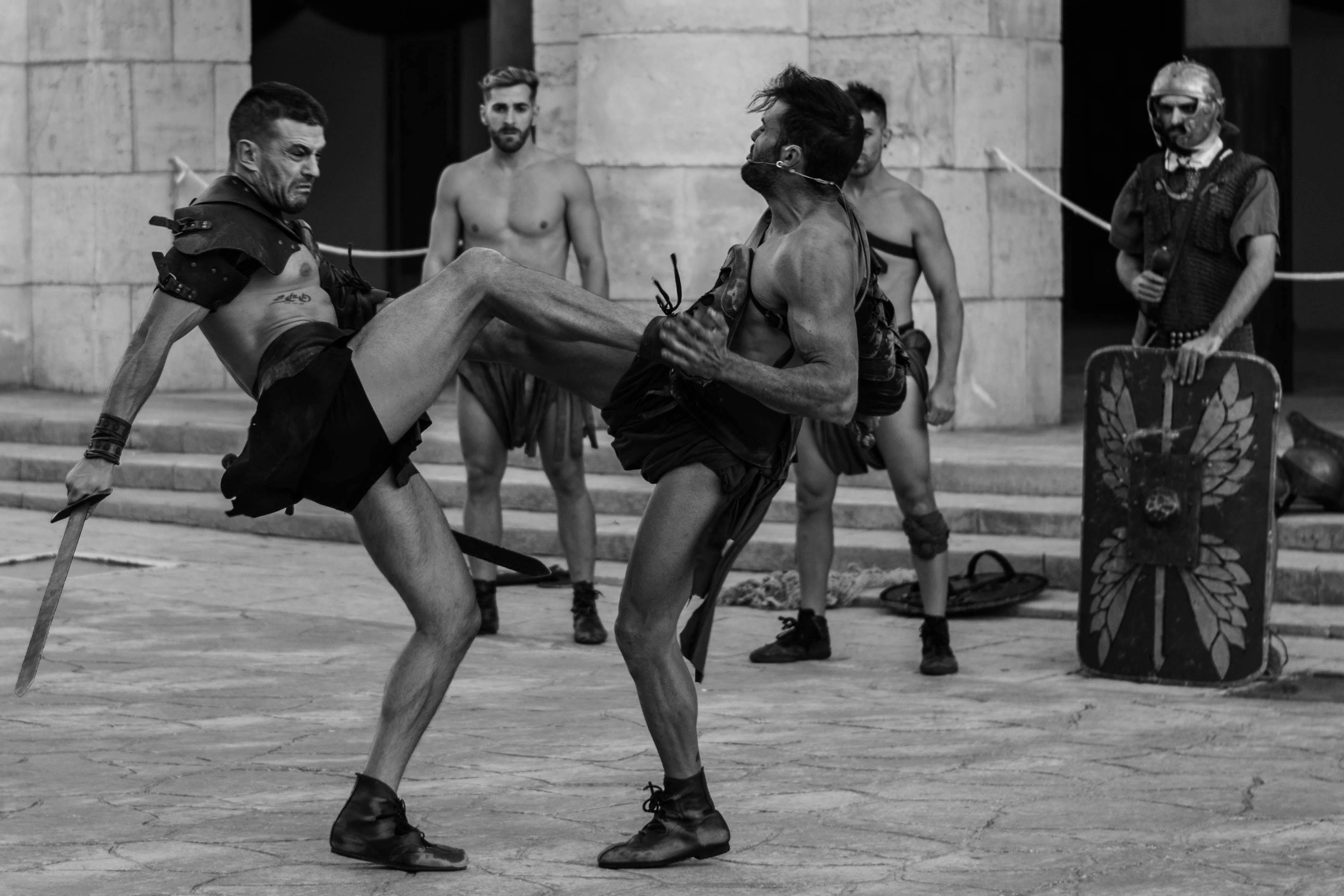
The neutral character is the Gladiator. The Gladiator must have a patron. Once per game, if the Gladiator's patron was nominated for execution, the patron may choose, in the Shadows, to exact vengeance on someone. This does not necessarily have to be the player that nominated them if they feel that someone else slighted them. The Gladiator is informed of this and has a choice. They either will kill the chosen character, or accept punishment and death themselves. Choosing their own death will result in two chaos tokens. Choosing to follow their patron's order will result in one additional chaos token over the regular assassination (meaning, usually two chaos tokens total) and the Gladiator's role is publicly announced in the next Forum.
On to the Conspirators, the first one would be the Martyr. If they are executed, then they add a base of three, rather than one, chaos tokens. If they are killed in the Shadows however, they do not add any chaos tokens.
The next is the False Tribune. They mimic the Orator, in that they can, once per game, reduce the amount of chaos tokens in play by two by invoking their ability. Unlike the Orator however, the False Tribune will choose a player in the Shadows, and that player then becomes a conspirator. They don't change role, and their abilities remain the same.
And finally we have the Assassin. They work very similarly to the Praetorian in that they can choose someone to die in the Shadows. They do not add any additional chaos tokens though. They also cannot arrest players.
I will reiterate some of the disclaimers for above. I have no experience with playing any of these games, and I have not had the opportunity to playtest this, and I don't expect I will for a while. Absolutely none of the numbers in it are likely to be right.
An additional thought that I have had while typing this up is to clarify exctly the decisions behind this and why I think it might, or might not work. Again, re-re-iterating, I am not claiming that these are good or that they will work, just that they were ideas. The initial idea when considering the game was whether it would work to remove the "information gathering" roles in Blood on the Clocktower, and build the game entirely on social reads, bluffs, and paranoia. The intention is that even the Republicans will be bluffing as each other, and being unsure what they can do, and who might stab them in the back on the ides of March. The addition of the patronage system was to add another layer to this where the insecurity would mean that players would be tying themselves to other players who might not be on the same team with the same goals, and they would be struggling to find out what is going on.
I have a bit of tidying up to do with the rules, to attempt to clarify them a bit, but the rules are currently available as PDF here, and the source available on git. As with previous game designs, I may consider some expansions, which would be additional trifold leaflets, in this case I'm thinking of calling them "campaigns", although that in a game context sounds more like an extended game with multiple sessions. The idea with those will be to maybe add a couple more roles, maybe some special rules, and a narrative intro.